Gecko producers briefed on registration, traceability and CITES permits
Local producers heard how Thailand’s export quota will be set, and how every gecko sold will need a documented route from catch to export.
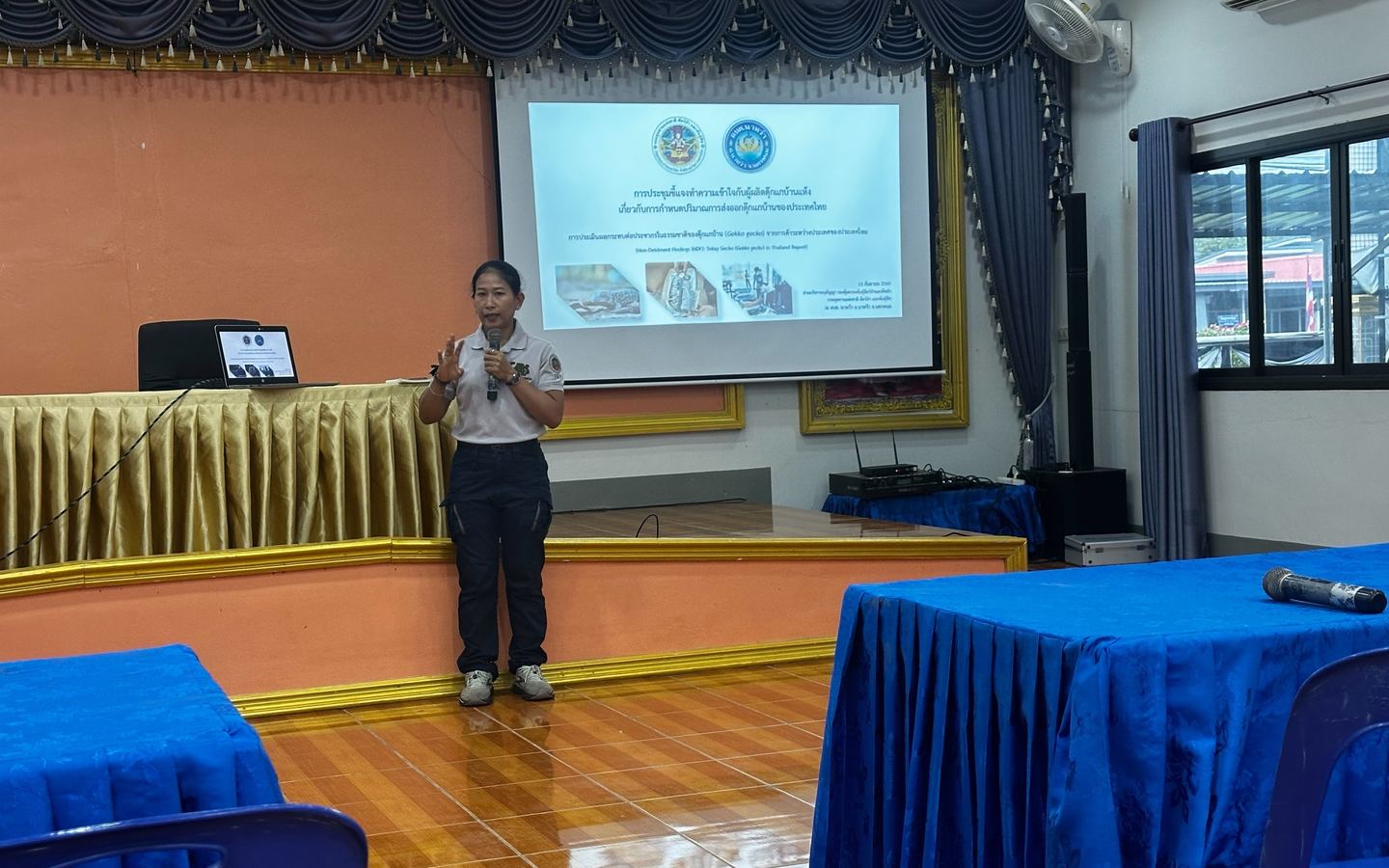
On 15 September 2026, Chuan Thai attended a meeting in Na Wa District held by the CITES Division of Thailand’s Department of National Parks, Wildlife and Plant Conservation (DNP), at a venue provided by the Na Wa Subdistrict Municipality. The meeting updated local Thai producers — the people who go out and catch tokay geckos and process them into dried products — on how Thailand’s export quota for tokay gecko will be set.
DNP also presented its Non-Detriment Findings (NDF) report, which assesses the impact of international trade on wild gecko populations in Thailand. Producers were advised of four requirements:
Registration
Everyone involved in the business will need to be registered.
Traceability
A traceable route will be built for each gecko sold.
CITES permit
A CITES permit will need to be obtained.
Minimum size
Geckos smaller than 13 cm will no longer be allowed.
The measures aim to stop origin laundering, where smuggled-in geckos are passed off as Thai product.
NextA further meeting for purchasers and exporters will be held in Bangkok at a later date.
What it means for buyers
A verifiable Thai origin will rest on registered sources and a documented chain of custody. We will update our Gecko Standards page as effective dates and procedures are published.